
Table of Contents
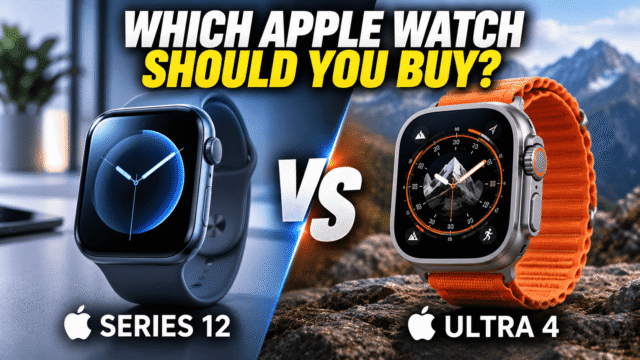
Apple announced the Apple Watch Series 12 and Apple Watch Ultra 4 on September 9, with pre-orders open now and both shipping Friday, September 18. The headline that matters most in a year like this one: prices didn’t move. The Series 12 starts at $399 and the Ultra 4 at $799, exactly as their predecessors did, which is a small relief given Apple raised Mac and iPad prices in June and component costs have pushed nearly every category upward.
So the buying question isn’t about price increases this year. It’s the more interesting one: is the new watch worth it over last year’s discounted model, and which of the two new watches do you actually need? Here’s the honest breakdown.
What’s Actually New
Both watches share the same core upgrades, which makes the lineup unusually easy to reason about.
- The S11 chip, which Apple describes as the first substantial silicon upgrade for the Watch in three generations. In practice that means quicker on-device processing, which is what powers the new features rather than making apps feel dramatically faster.
- A new Health Sensing System, and this is the genuine story of the year. The redesigned heart sensors capture heart rate roughly every five seconds all day, along with higher-frequency heart rate variability data, which Apple claims makes it the most accurate heart rate sensing in a wearable.
- Readiness, a daily 0-to-10 score built from that denser data plus your activity, training load, and sleep, delivered with a plain recommendation: Recover, Pace Yourself, Ready, or Go For It. It updates through the day as new data arrives, and Apple developed the algorithm using data from its own Heart and Movement Study. Worth noting the competitive angle: Whoop, Oura, and Garmin have sold this concept for years behind subscriptions, and here it’s included.
- Audio Intelligence features and deeper Apple Intelligence integration, including Siri-powered recaps.
- Better battery. The Series 12 goes to around 24 hours from 18, with roughly 10 hours during workouts and faster charging. The Ultra 4 stretches to about 50 hours of normal use, 84 hours in Low Power Mode, and roughly 45 hours of continuous outdoor workout tracking.
- Tougher glass and new finishes. The aluminium Series 12 gets Ceramic Shield 2 on the front, which Apple says is 60% more durable than the previous Ion-X glass, and a ceramic case option returns after six years away in Pearl White and Night Blue, alongside new Dark Bronze, Black, and Light Gold aluminium.
- What didn’t happen: no radical redesign, and no Apple Watch SE 4. The SE 3 stays in the lineup at $249.
Series 12 vs Ultra 4: What $400 Actually Buys
Because both watches now share the S11 chip, the Health Sensing System, and Readiness, the choice is cleaner than it was last year. The extra $400 buys exactly four things:
- Battery life, roughly double, which is the single most compelling reason.
- A bigger, tougher titanium case in black or natural titanium, at 49mm, with the brightest display in the line.
- Satellite connectivity for emergency communication beyond cellular coverage, plus deeper diving support and dual-frequency GPS.
- The Action Button, the customisable physical control the Series 12 doesn’t have.
If none of those four sentences describes your life, the Series 12 is your watch and the Ultra is jewellery you’ll charge less often. If you hike, dive, run ultras, or genuinely travel beyond coverage, the Ultra earns it.
Should You Buy Last Year’s Model Instead?
This is where the real money is, and this year the answer is less obvious than usual.
The case for the discounted Series 11 or Ultra 3: they were already selling below list before the announcement, with the Series 11 seen around $329 and the Ultra 3 near $649, and those discounts typically deepen once a successor ships. Both run watchOS 27, which arrived September 14 and supports Series 9 and later, the SE 3, and Ultra 2 and later. Design and screen are effectively unchanged. Apple also sells certified refurbished Watches with full warranty, which is the same play with a bigger discount, and the general rules for buying refurbished apply.
The case against, and it’s stronger than in most years: the Health Sensing System is a hardware upgrade. Readiness and the five-second heart rate sampling depend on the new sensors, so no software update brings them to older watches. In a typical year I’d tell you the outgoing model is the smart buy because the differences are marginal. This year, if the health data is why you want an Apple Watch, the new sensors are the product.
My honest split: buy the Series 12 if health tracking is your actual reason for buying. Buy the discounted Series 11 if you want notifications, fitness basics, and Apple Pay on your wrist and regard the health stuff as a bonus. That’s a genuine fork rather than a hedge.
The Health Features, Honestly
- Readiness is the standout, and its value depends entirely on whether you’ll act on it. As a training tool it’s genuinely useful; as another number to feel guilty about, less so.
- Fall detection and Emergency SOS remain the features that justify buying a watch for an older relative, and they’re on every model including the $249 SE 3.
- ECG and irregular rhythm notifications are the medically meaningful ones, available on Series and Ultra but not the SE.
- Hypertension notifications need a clear caveat, because this is where a lot of buyers will be disappointed. The feature is gated on regulatory clearance market by market, and it is not available in every country at launch. In the UAE, for instance, Apple’s own footnotes confirm it won’t be available on either new watch until additional clearances complete, with the feature expected next year. Check your own market’s status before buying specifically for blood pressure alerts, because the sensors may be capable while the software switch stays off.
That regional pattern has repeated with ECG and sleep apnoea notifications before, so treat any headline health feature as “available where cleared” rather than universally.
Size, Cellular, and Bands
- Size: the 42mm and 46mm difference is screen area, not features. Try both if you can, and remember a large case gets uncomfortable during sleep tracking, which is when people stop wearing them.
- Cellular: about $100 more plus a monthly line. Worth it only if you genuinely leave your phone behind for runs, rides, or swims. Most buyers discover their phone is always in reach anyway.
- Bands: existing bands remain compatible within their size groups, so an old collection carries over. Apple’s expensive bands are jewellery; third-party sport bands perform identically for a fraction.
Verdicts by Situation
- Buying for a parent or grandparent: the SE 3 at $249, unchanged and unreplaced this year. Fall detection and Emergency SOS are the point, and they’re all present.
- First Apple Watch, general use: Series 12 at $399 if you’ll use the health features; a discounted Series 11 if you won’t.
- Upgrading from Series 9 or older: worth it, and the sensor upgrade makes this the strongest upgrade year in a while.
- Upgrading from Series 10 or 11: only if Readiness and the new heart sensing genuinely appeal. Otherwise your watch is fine and the $399 is better saved.
- Serious outdoors or endurance: Ultra 4, with the battery alone justifying it. Compare against Ultra 3 discounts if satellite and 50-hour battery aren’t essentials.
- Android user: Apple Watch doesn’t work with Android at all, and never has.
Quick Answers
How much do the Apple Watch Series 12 and Ultra 4 cost?
$399 and $799 respectively in the US, unchanged from last year’s models. Pre-orders opened September 9 with availability from September 18.
What’s actually new on the Series 12?
The S11 chip, a redesigned Health Sensing System sampling heart rate about every five seconds, a daily Readiness score, Audio Intelligence features, around 24 hours of battery, Ceramic Shield 2 glass, and a returning ceramic case option.
Can older Apple Watches get Readiness?
No. Readiness depends on the new Health Sensing System hardware, so it doesn’t come to older models via watchOS 27.
Is the Ultra 4 worth $400 more?
Only for battery life, titanium ruggedness, satellite emergency communication, and the Action Button. The core chip, sensors, and Readiness are identical to the Series 12.
Will I get hypertension notifications?
It depends on your country’s regulatory clearance. The feature is unavailable in some markets at launch, including the UAE, with clearance expected later. Verify locally before buying for that feature.
The Bottom Line
A rare Apple launch where the price didn’t move and the upgrade is real. The Health Sensing System and Readiness are genuine hardware advances that older watches can’t receive by update, which flips this year’s usual advice: if health tracking is why you want an Apple Watch, buy the new one. If it isn’t, the discounted Series 11 will feel identical on your wrist and run the same software. The SE 3 at $249 remains the right answer for gifts and first watches, the Ultra 4 earns its premium purely on battery and ruggedness, and cellular is still the upsell most people regret. Check your market’s health feature availability before buying for any specific medical feature, because the sensors and the permissions don’t always arrive together.