
Table of Contents
There’s a phone in your drawer right now losing value every week you leave it there. And if you’re planning to upgrade this month, there’s a deadline attached: Apple’s event is on September 9, and the used market reprices the moment new phones are announced, not when they ship.
So here’s the practical guide to getting the most out of a device you’ve finished with, including the honest comparison of your three options, the timing that costs people the most money, and the checklist that has to happen before the phone leaves your hands. One disclosure first: almost every guide ranking for this topic is published by a company that buys phones, which is worth remembering when they tell you selling to them is the smart move.
What Your Phone Is Actually Worth
Three things set the price: model, age, and condition, in that order. A recent flagship in excellent shape holds a large fraction of its retail price, while a three-year-old mid-range phone holds a modest slice of it. Depreciation is steep and continuous, which is the entire argument against the drawer.
Two things people get wrong. Broken phones still have real value, because buyback companies refurbish or harvest them, so a cracked screen means a reduced offer rather than no offer. And quotes for the identical phone vary enormously between services, often by a hundred dollars or more on recent flagships, because each buyer has different downstream demand. Which produces the single highest-value tip in this article: get quotes from at least three places before accepting any of them. Five minutes of comparison is frequently worth more than everything else on this list combined.
Trade-In vs Buyback vs Selling It Yourself
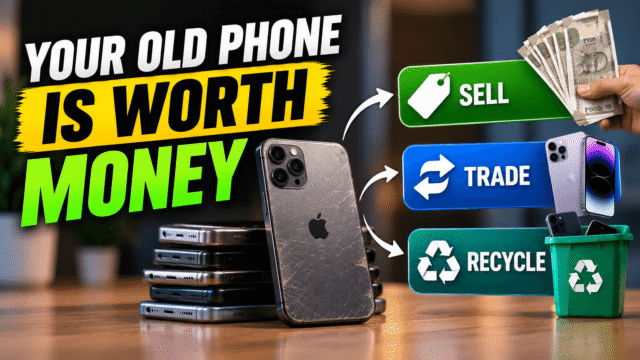
- Carrier and manufacturer trade-in is the most convenient and usually the least valuable. It’s fast, it happens at checkout, and it typically pays in bill credits spread across 24 to 36 months while requiring you to buy a new phone from them. That’s not automatically bad, but understand what you’re accepting: a $400 credit locked to a carrier over two years is worth less than it looks against $325 in cash you can spend anywhere, and it ties you to a contract.
- Buyback services (Decluttr, Gazelle, Back Market, ecoATM and similar) are the sensible middle. You get an instant online quote for your exact model, free prepaid shipping, and cash rather than credit, typically landing somewhere around 60 to 75% of what a private sale would fetch. The trade-off to know: offers are provisional until inspection, and a meaningful share get revised downward when the phone arrives, so describe condition honestly rather than optimistically and you’ll avoid the disappointing counter-offer.
- Selling it yourself on Swappa, eBay, or a local marketplace nets the most, commonly 10 to 25% above buyback, at the cost of photos, listings, messages from people asking if you’ll take half, shipping, and genuine scam risk. Worth it on expensive recent phones, rarely worth it on anything older or cheap.
- In India, Cashify is the most established buyback service, with Flipkart Exchange and Amazon Exchange worth checking if you’re upgrading on those platforms anyway, and OLX or Quikr for private sales. Compare all of them before accepting any single quote, since the spread on the same handset is routinely thousands of rupees.
My honest rule of thumb: private sale for high-value recent flagships, buyback for everything mid-range, trade-in only when the carrier promotion is genuinely exceptional and you were buying from them anyway.
What Kills Resale Value
- Missing accessories and box, which cost you a small but real premium on private sales.
- Cracks and deep scratches, obviously, though less than people assume, so don’t dump a cracked phone for free.
- Battery health below 80%, which buyers check first on iPhones and which turns an “excellent” listing into a haggling opportunity. If you’re selling privately and the battery is weak, know that a replacement sometimes pays for itself in the sale price.
- Carrier locks and account locks. A locked phone is worth dramatically less, and one still tied to your Apple or Google account is worth nothing at all until that’s resolved, which is the single most common reason used-phone sales collapse.
- Time. More than any of the above. Every month you wait, the number falls.
Timing: Why Announcement Day Matters
Here’s the thing almost nobody accounts for: used phone values drop when new models are announced, not when they arrive in stores. The market reprices on information, and by the time you’re holding your shiny new phone, the old one has already fallen.
Which makes the current week unusually actionable. If you’re planning to upgrade after Apple’s September 9 event, get quotes now and lock them. Most buyback services hold a quoted price for a couple of weeks, which means you can bank today’s value, receive your new phone, and ship the old one inside the quote window. That single piece of sequencing is worth more than any negotiating tactic, and it’s advice we’ve now given three times this year for a reason.
The corollary: the phone you’ve been “meaning to sell” since last year has already lost most of what it was going to lose, so stop waiting for a better moment. There isn’t one.
Before It Leaves Your Hands
Non-negotiable, in order, and no exceptions for a phone going to a buyback company either, since the device passes through multiple hands.
Back up everything and verify the backup completed. Move your two-factor authenticator app to the new phone and confirm codes work there. Transfer your eSIM or remove the SIM. Sign out of your Apple or Google account so activation lock releases, because a locked phone is useless to the buyer and will get bounced back to you. Then factory reset. And take out any microSD card.
We’ve covered the full sequence in detail in our guide to wiping a phone before selling, and the order genuinely matters: signing out has to happen before the reset, and modern encryption means a properly reset phone is unrecoverable, so no double-wipe rituals required.
Selling privately, two extra rules: meet in a public place during daylight (many police stations offer designated exchange zones), and accept cash or an instant bank transfer you can see cleared, never a payment app you’re unfamiliar with or anything involving shipping the phone before funds land.
When It’s Worth Nothing: Recycling Properly
Some phones genuinely have no resale value: ancient models, water-damaged devices, phones with dead boards. Don’t put them in a drawer and don’t put them in the bin.
The honest reality of the economics: the recoverable precious metals in a single handset are worth a couple of dollars at most, so recycling isn’t a payday. It matters at scale, where a million recycled phones yield tons of copper along with meaningful quantities of silver, gold, and palladium, and it keeps lithium batteries out of landfill where they’re a genuine fire and contamination risk.
Free options are everywhere: manufacturer mail-back programmes from Apple and Samsung, carrier store drop-offs, Best Buy and similar retailers, and municipal e-waste collection. Wipe the phone first regardless, because “it’s being recycled” is not a data-protection strategy, and remove the battery only if the recycler asks, never by force.
Quick Answers
Is it better to trade in my phone or sell it?
Selling privately nets the most, buyback services pay cash quickly at roughly 60 to 75% of private-sale value, and carrier trade-in is the most convenient and usually the least valuable since it pays in bill credits over two or three years.
When should I sell my old phone?
Before new models are announced, since used values drop on announcement rather than on release. Lock a buyback quote before the event and ship after your new phone arrives.
Is my cracked phone worth anything?
Yes. Buyback services still pay for damaged devices because they refurbish or harvest them. Expect a reduced offer, not a refusal.
Do I need to factory reset before trading in?
Absolutely, and you need to sign out of your Apple or Google account first so activation lock releases. A locked phone gets rejected and returned.
What do I do with a phone that has no value?
Recycle it free through a manufacturer mail-back programme, carrier store, retailer drop-off, or municipal e-waste collection, after wiping it properly.
The Bottom Line
The most expensive thing you can do with an old phone is nothing. Get three quotes rather than accepting the first, sell privately if it’s a recent flagship and you can tolerate the hassle, use a buyback service for everything else, and treat carrier credit as the convenience option it is rather than the deal it’s presented as. Lock your quote before September 9 if you’re upgrading this month, because the market marks phones down on announcement day. And whatever route you take, sign out and wipe properly first, because the difference between a clean sale and a returned parcel is one setting.