
Table of Contents
Every September the same ritual plays out: the update notification appears, your thumb hovers, and some part of your brain remembers a friend whose phone got weird last year. iOS 27 arrives this month, expected in the week or so after Apple’s September 9 event, and the question is the same one it always is: install immediately, or let other people find the bugs first?
Here’s my honest answer, plus the part that matters more than the answer. Whichever you choose, there’s a fifteen-minute checklist to do first, and skipping it is what turns a routine update into a bad evening.
What Actually Goes Wrong on Day One
Major iOS releases fail in predictable ways, and knowing them separates real problems from normal behaviour.
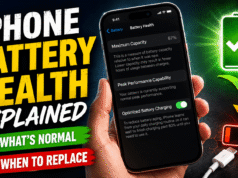
- Battery drain for the first two or three days. This is the complaint that floods social media every year, and it’s usually not a bug. After a major update your phone re-indexes photos, rebuilds search databases, and completes setup tasks in the background, which is genuinely heavy work. Apple even surfaces this directly: open Settings, Battery, and if you see an insight labelled Ongoing iOS Update or Ongoing Device Setup, the drain you’re seeing is expected and temporary. Give it three days before judging.
- Third-party apps that haven’t caught up. The riskiest category is the one people can least afford to lose: banking apps and authenticator apps. Developers usually ship compatibility updates within days, but “usually” is doing work there, and being locked out of your bank on a Tuesday is a real cost.
- Accessories and integrations misbehaving, particularly smartwatches, car systems, and hearing devices, which often need their own firmware updates to catch up.
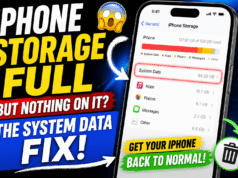
- Storage problems. This is the sleeper issue, because iOS 26 shipped with a bug that let System Data balloon until some people literally couldn’t install updates on their own phones. That’s fixed, but it’s a reminder that free space matters more than people expect.
And the honest broader point: iOS 26’s launch was rough enough that a wait-a-week reflex became reasonable advice. iOS 27 is a refinement release rather than a redesign, which historically means fewer surprises, but “historically” is not a guarantee.
The Pre-Update Checklist (Do This First)
Fifteen minutes, and it applies whether you update today or in three weeks.
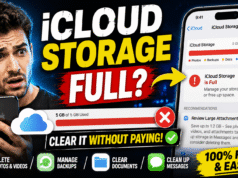
- Back up, and verify the backup finished. Settings, your name, iCloud, iCloud Backup, then Back Up Now, and wait for it to say it completed. If iCloud is full, that’s tonight’s actual job. For anything precious, a computer backup via Finder or the Apple Devices app is stronger, and if your photos are the thing you’d truly mourn, the proper backup plan is worth setting up before you touch any update.
- Check your free space. You want several gigabytes free before starting. If Settings shows a bloated System Data figure, deal with that first.
- Move your two-factor codes somewhere safe. Make sure your authenticator app has cloud sync enabled or that you have backup codes stored off the phone. Updates almost never break authenticators, but if one does, you’re locked out of everything at once, and that’s the failure mode with the longest tail.
- Update your apps first. App Store, your profile, Update All. Developers ship compatibility updates ahead of release, so an app updated the day before is far likelier to survive the transition.
- Charge past 50% and use Wi-Fi, ideally leaving the phone plugged in through the install.
- Note anything critical. If you rely on a specific app for work, a medical device, or a car integration, spend two minutes checking whether its maker has said anything about iOS 27 compatibility. That’s the entire difference between an informed decision and a gamble.
Who Should Update Immediately, and Who Should Wait
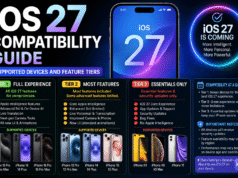
Update on day one if: your iPhone is a secondary device, or you’re comfortable troubleshooting, or you specifically want the new Siri and Apple Intelligence features (bearing in mind those need an iPhone 15 Pro or newer, per the tier system we mapped when the supported-devices list came out). Also update promptly if the release notes mention a security fix that matters to you.
Wait one to two weeks if: your iPhone is your only phone, you depend on it for work, you bank exclusively on mobile, or you use specialised apps or accessories. Nothing bad happens by waiting, and the first point update (the x.0.1 that lands within a couple of weeks) resolves most launch-day issues.
Wait longer, deliberately, if: you’re travelling imminently, you have a critical deadline this week, or your iPhone is one of the older supported models where a major release tends to be felt hardest. There’s no prize for being early, and the security argument for urgency mostly applies once a patch addresses an actively exploited flaw, which Apple flags clearly when it happens.
My own practice, for what it’s worth: I wait until the first weekend after release, check whether anything alarming has surfaced, then install with a fresh backup.
If Your Storage Won’t Let You Update
A frustrating loop plenty of people hit: the update needs several gigabytes free, and the phone hasn’t got them.
Two escapes. First, update through a computer, which needs far less free space on the phone itself: connect to a Mac (Finder) or Windows PC (Apple Devices app), select the phone, and update from there. Second, actually free the space, starting with the fastest wins: offload unused apps, delete downloaded video from streaming apps, and empty Recently Deleted in Photos, which holds files for 30 days while still consuming your storage.
If It Goes Wrong
- Battery drain: wait three days, check for the Ongoing iOS Update insight in Settings, Battery, and resist stripping settings out in a panic.
- An app is broken: check the App Store for an update first, then delete and reinstall it if there’s no update. Contact the developer rather than assuming the OS is at fault.
- The phone feels slow: restart it. Background indexing plus a stale session is the usual explanation, and a reboot resolves a surprising amount.
- Something serious: downgrading is possible only for a short window after release and typically erases the device, which is why the backup at step one matters. In practice, waiting for the first point update is a better plan than rolling back.
Quick Answers
When is iOS 27 coming out?
Apple hasn’t confirmed a date; it typically announces it at the September event, with release usually following within a week or two. Expect mid-September, alongside the new iPhones.
Is it safe to update to iOS 27 on day one?
For most people, yes, with a fresh backup. If your iPhone is your only phone and you depend on banking or work apps, waiting a week or two costs nothing and avoids the first wave of app incompatibilities.
Why does my battery drain after updating?
Background indexing and setup tasks run for a few days after a major update. Apple flags this in Settings, Battery as Ongoing iOS Update or Ongoing Device Setup, and it resolves on its own.
Can I go back to iOS 26 if I don’t like iOS 27?
Only briefly after release, and downgrading usually erases the phone, restoring from a backup made on the older version. Treat updating as one-directional and back up first.
Will iOS 27 slow down my older iPhone?
Apple pitched iOS 27 as a performance and refinement release, which historically favours older hardware. Expect a few days of heavier background activity regardless.
The Bottom Line
The update question has a boring answer and an important one. Boring: most people can install iOS 27 on day one and be fine, and anyone whose phone is mission-critical should wait a week or two for the first point release. Important: back up properly, verify the backup finished, clear enough free space, make sure your two-factor codes survive the transition, and update your apps before you update your phone. Do those and the worst case is a slow evening and a warm battery. Skip them, and the worst case is a very different article you’ll be searching for at midnight.